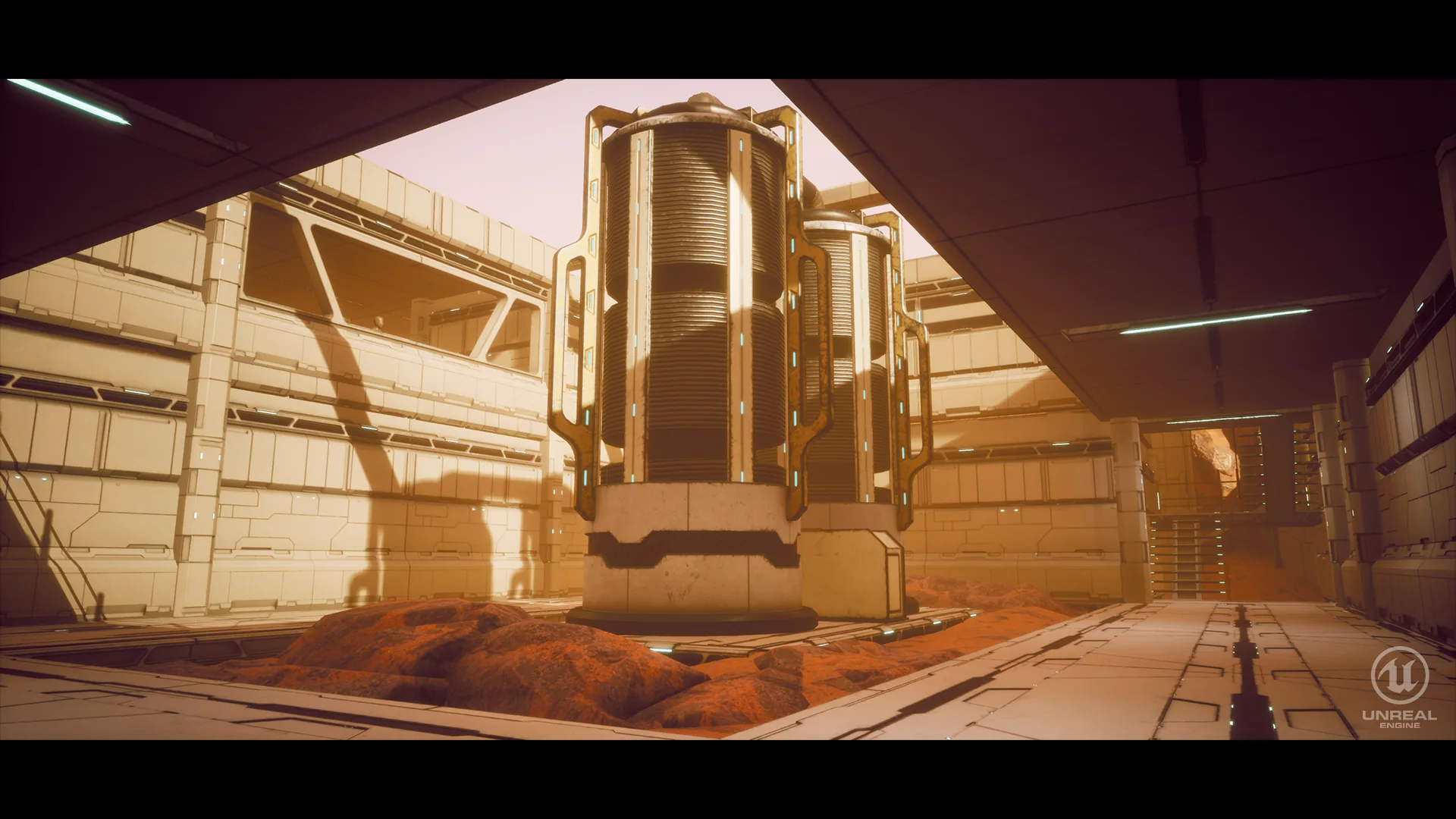
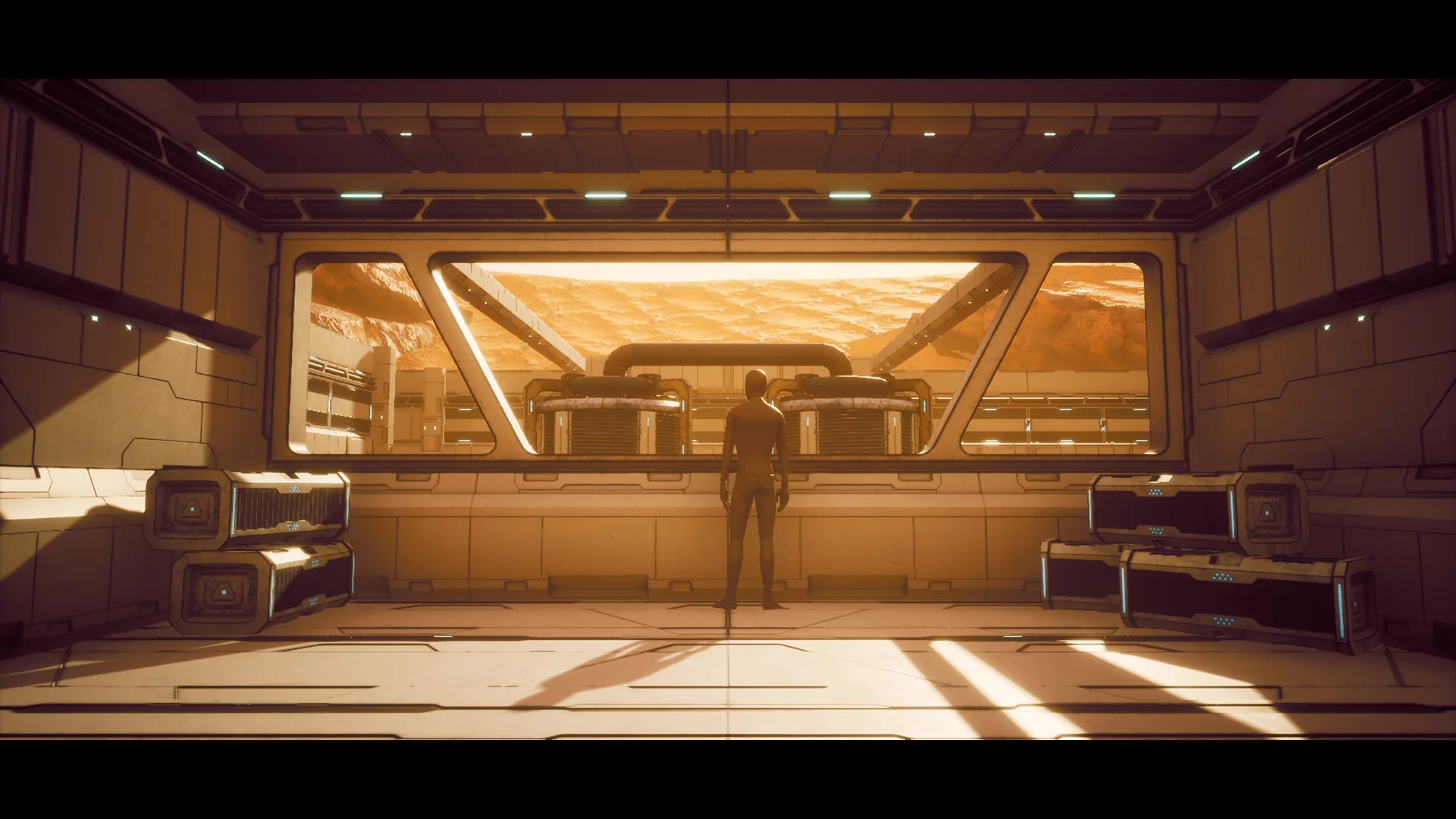
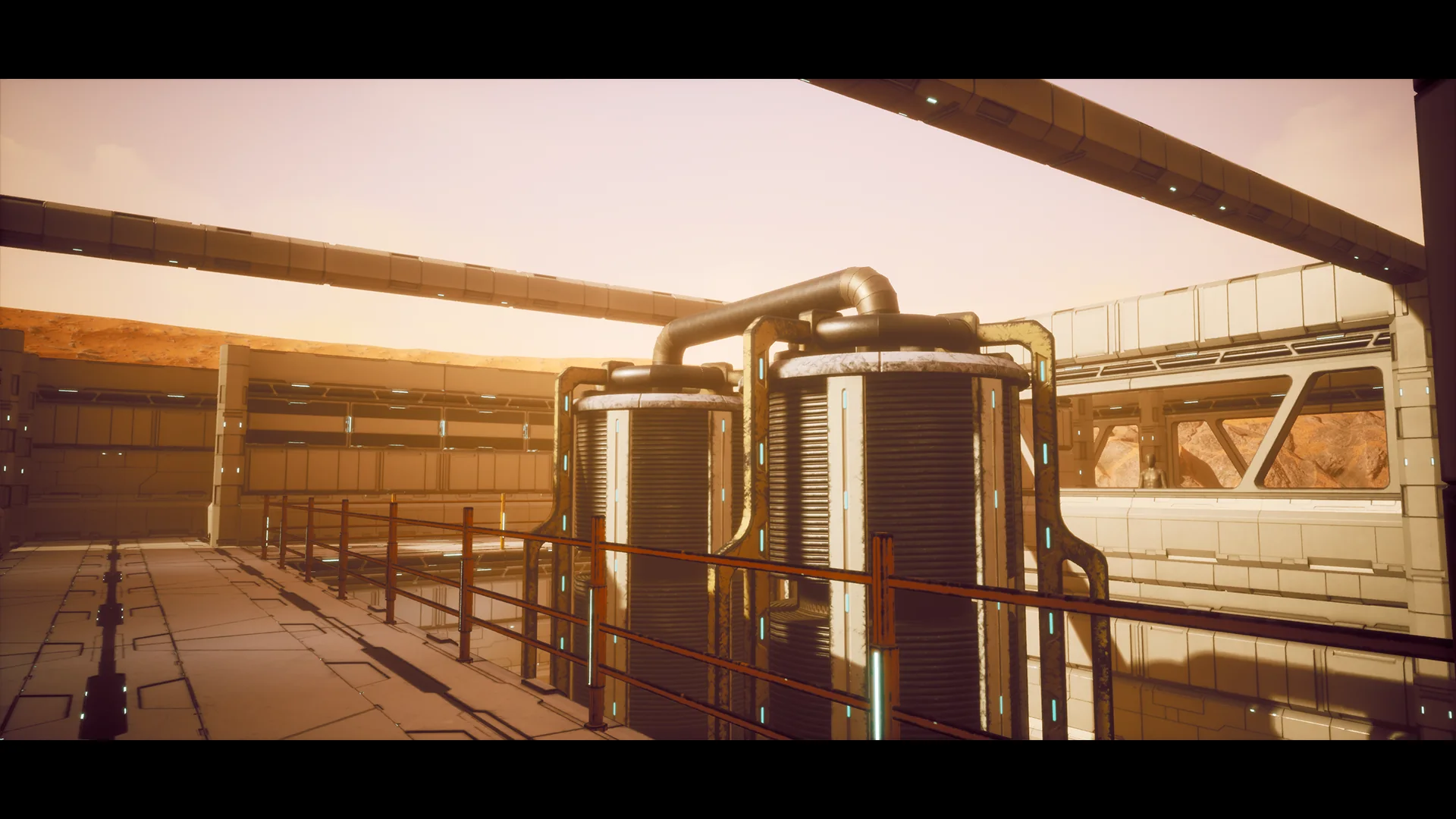
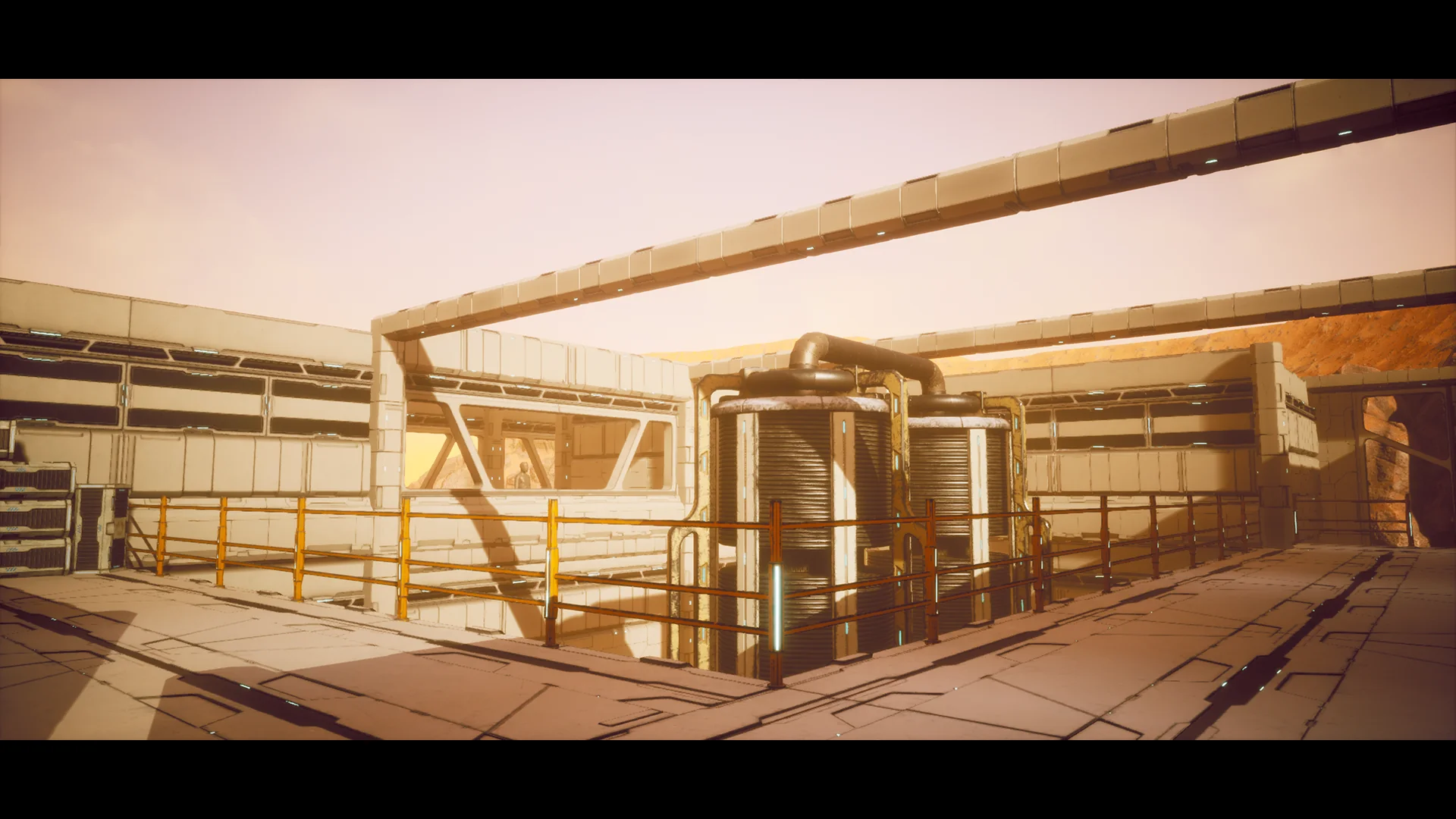
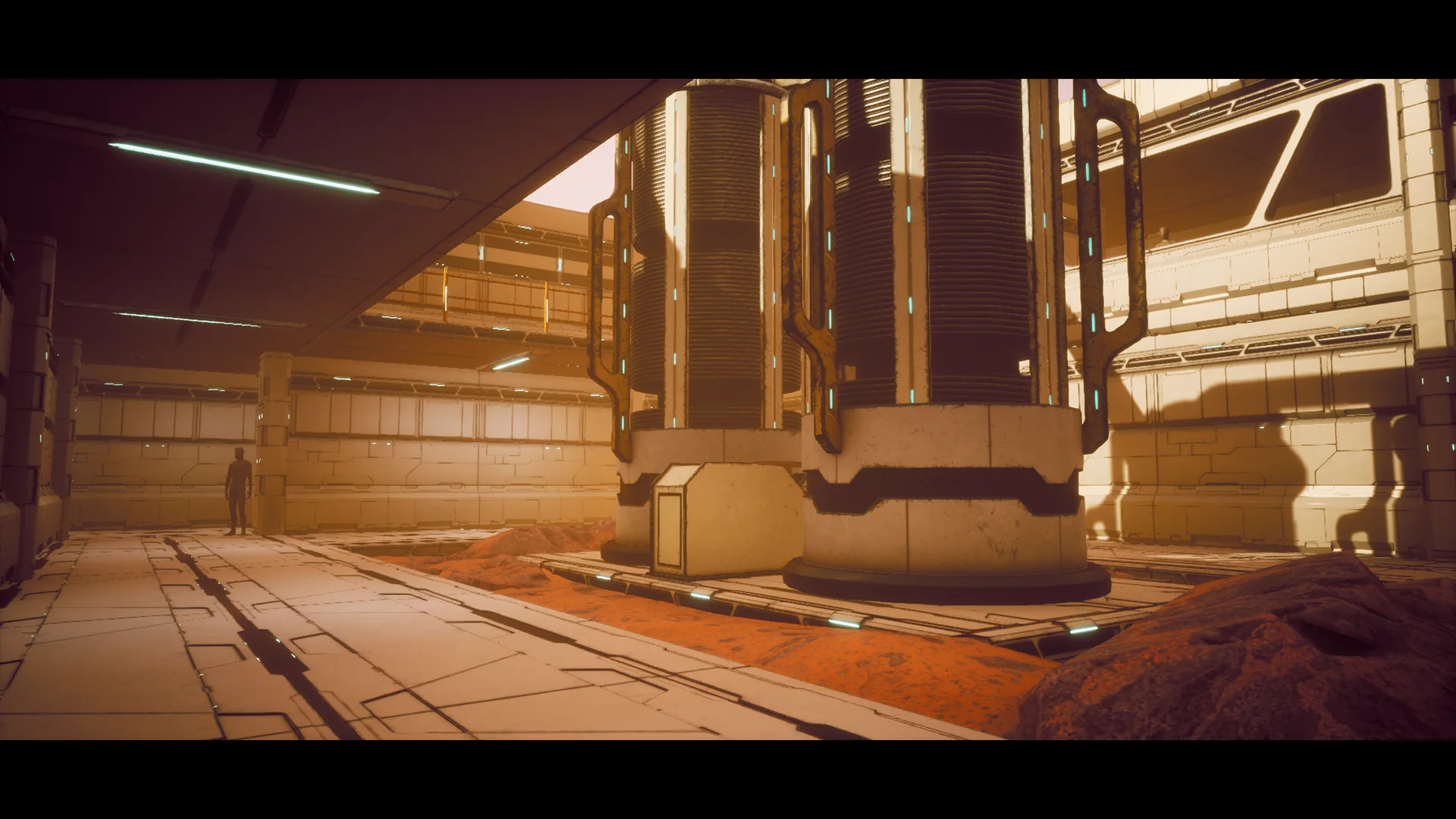
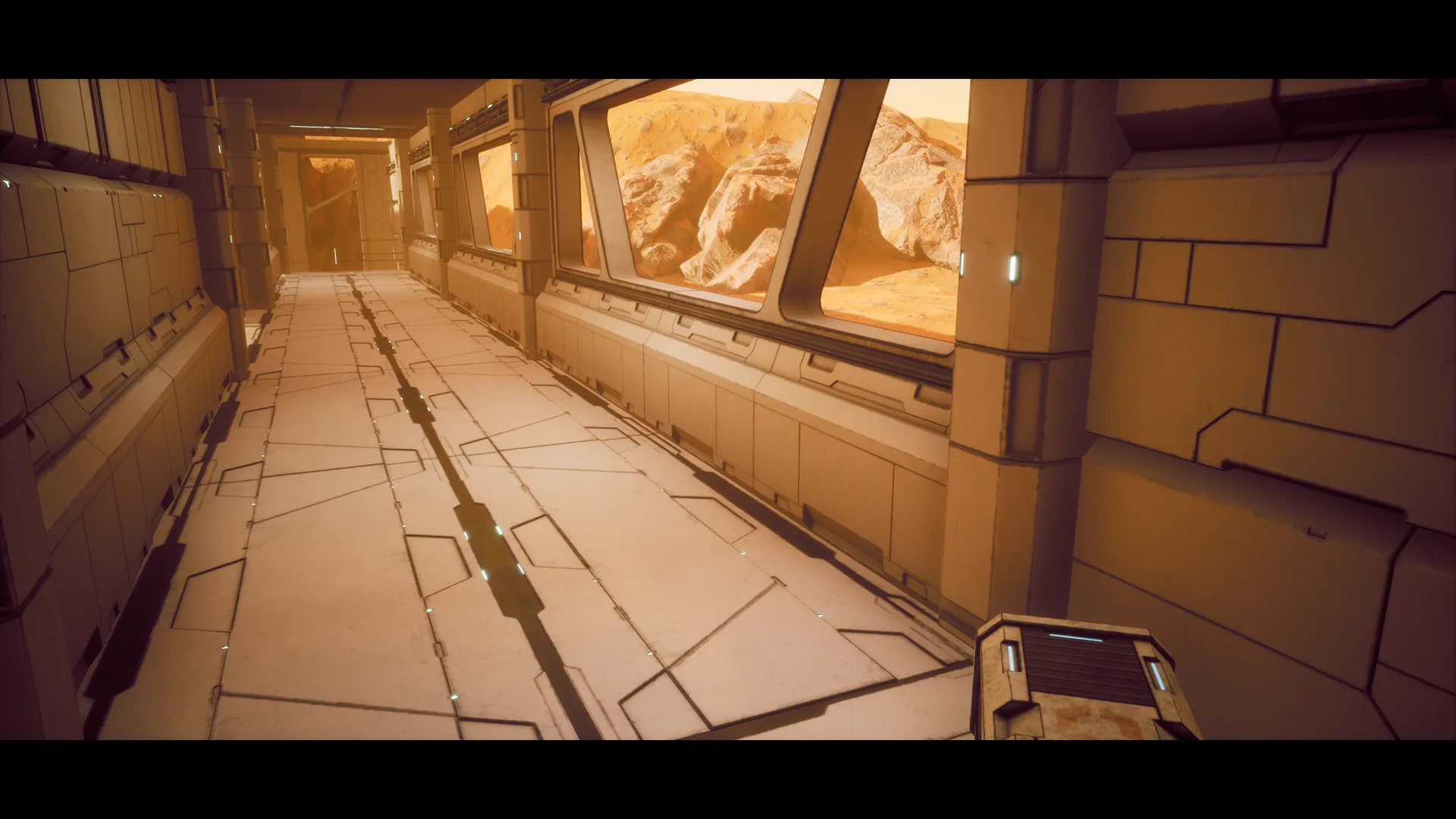
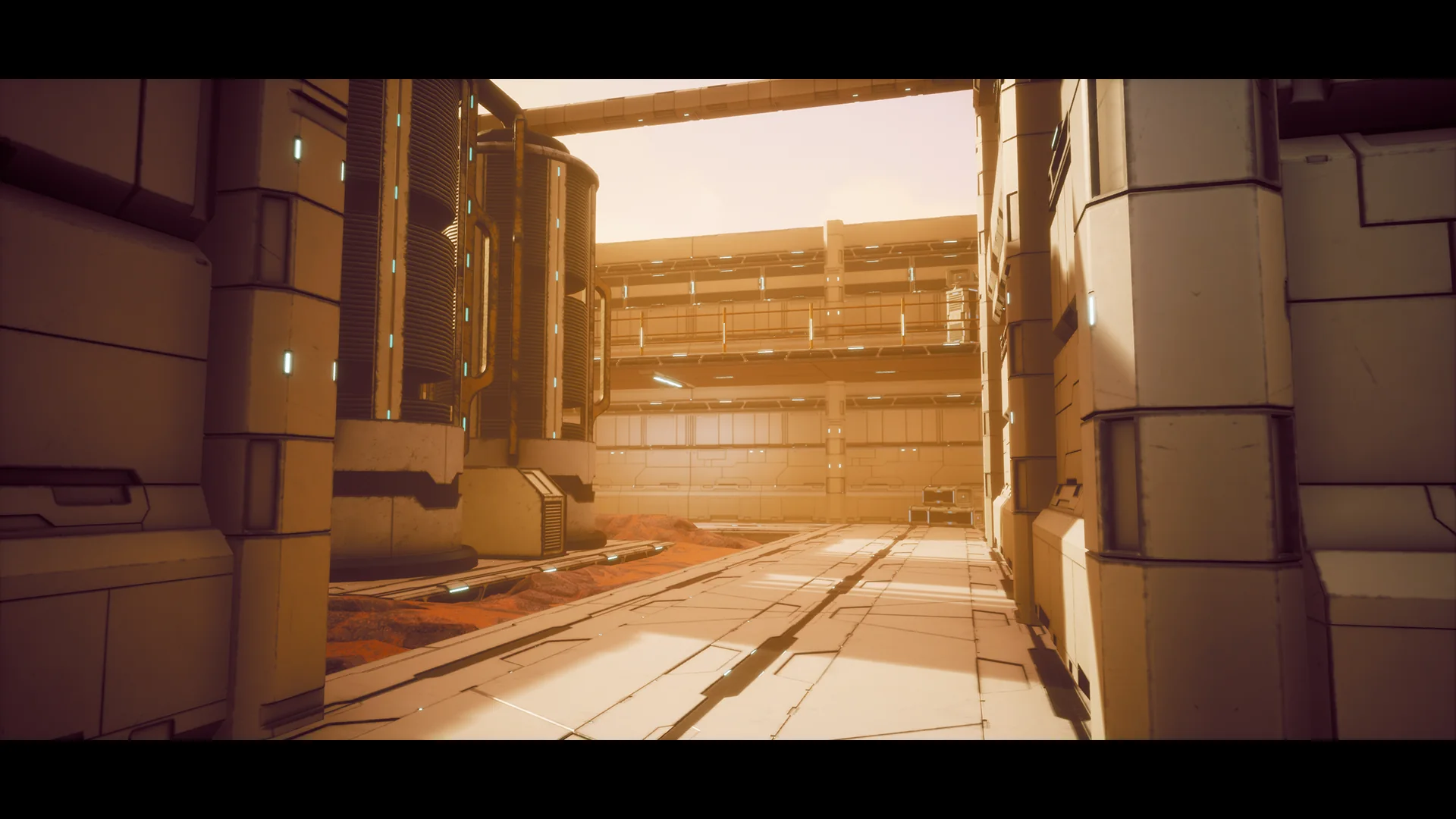
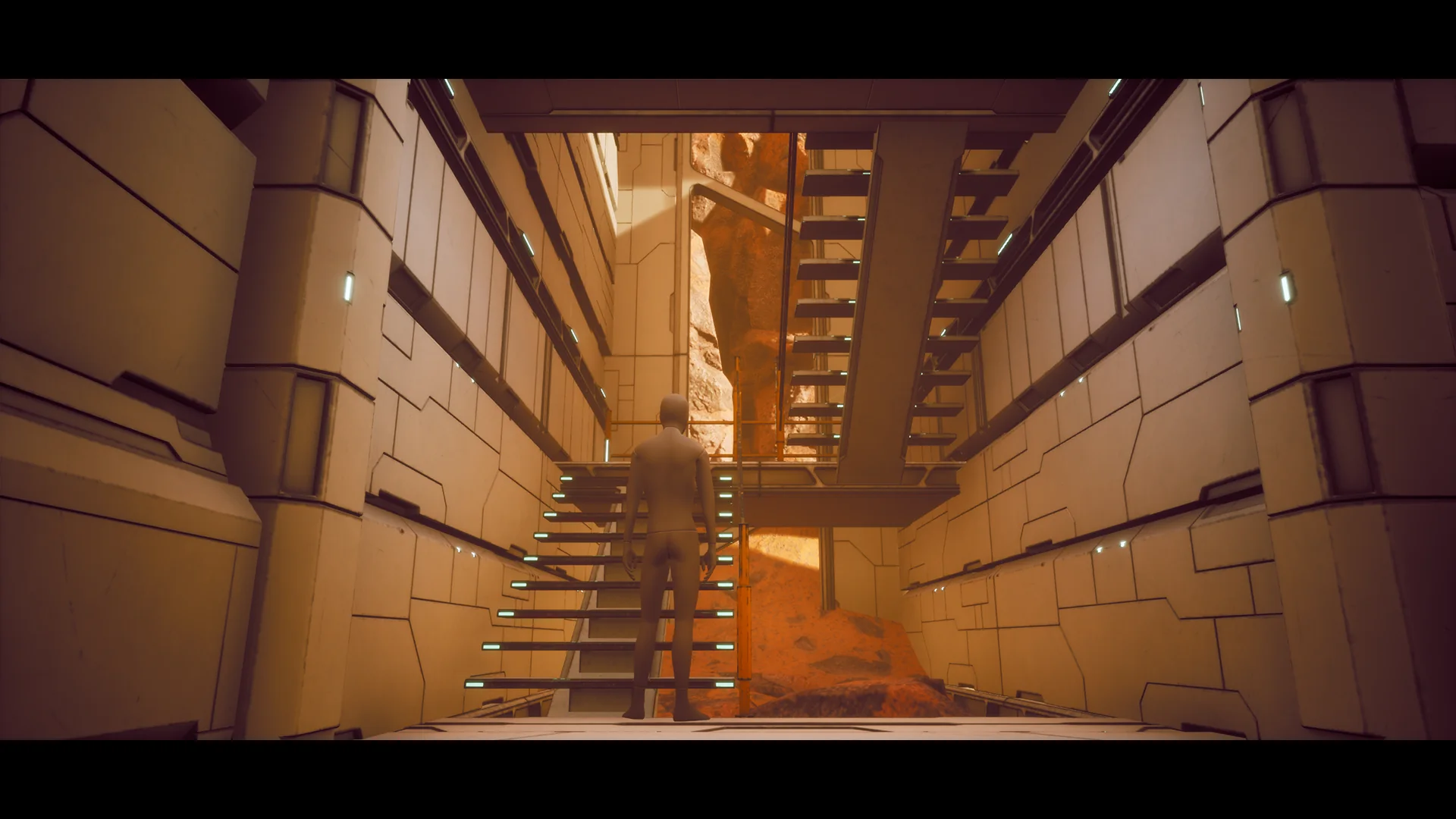
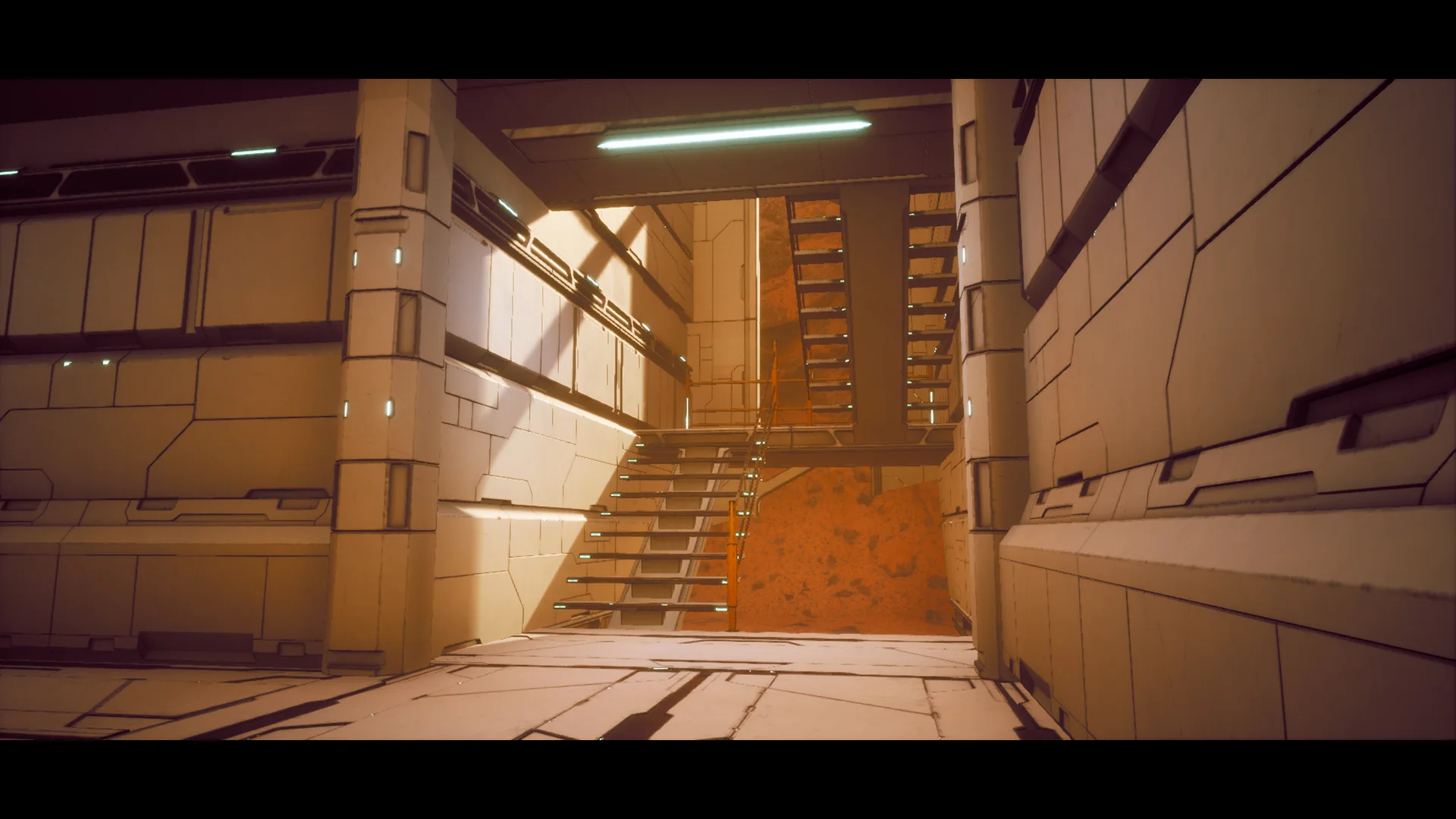
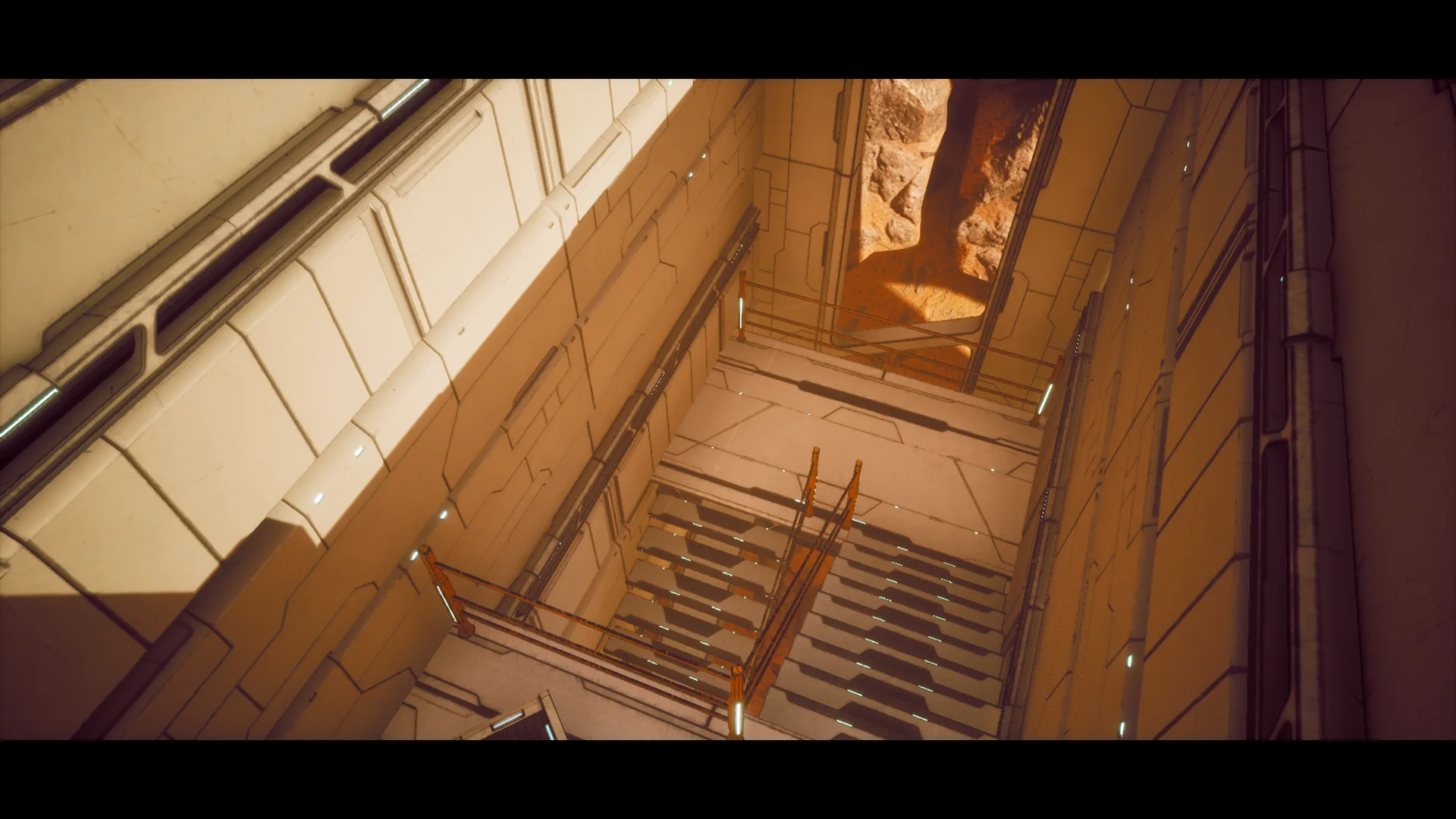
Horizon Outpost is a sci-fi level built end to end from a modular kit in Unreal Engine, aimed at VR. Every corridor, courtyard and stairwell you see is assembled from the same set of reusable pieces — modelled and unwrapped in Maya, textured in Substance Painter. It was built as the groundwork for a fully interactive VR game.
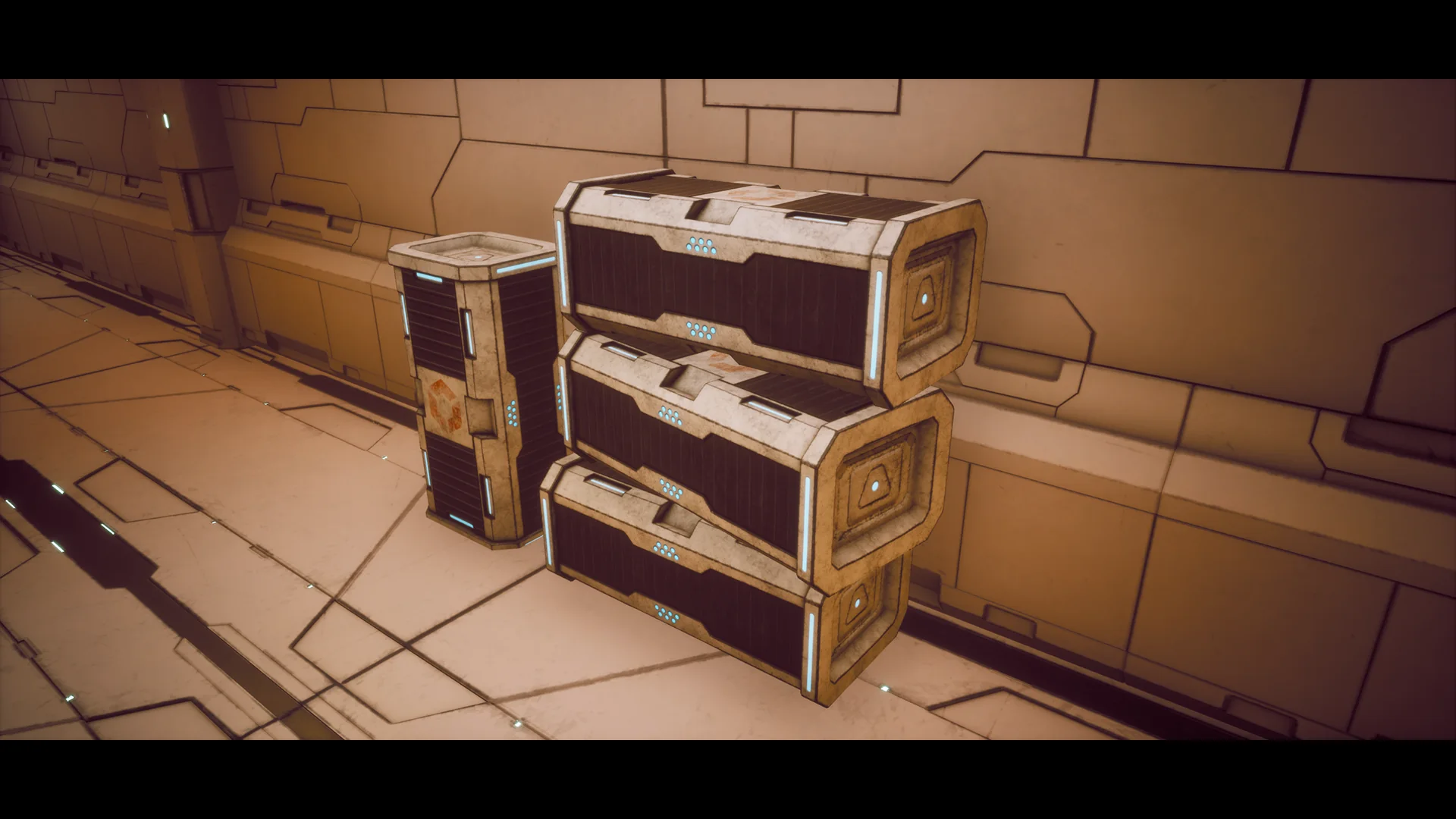
Engine, stairs and containerStill · click to load
Never autoloads · initialises on click
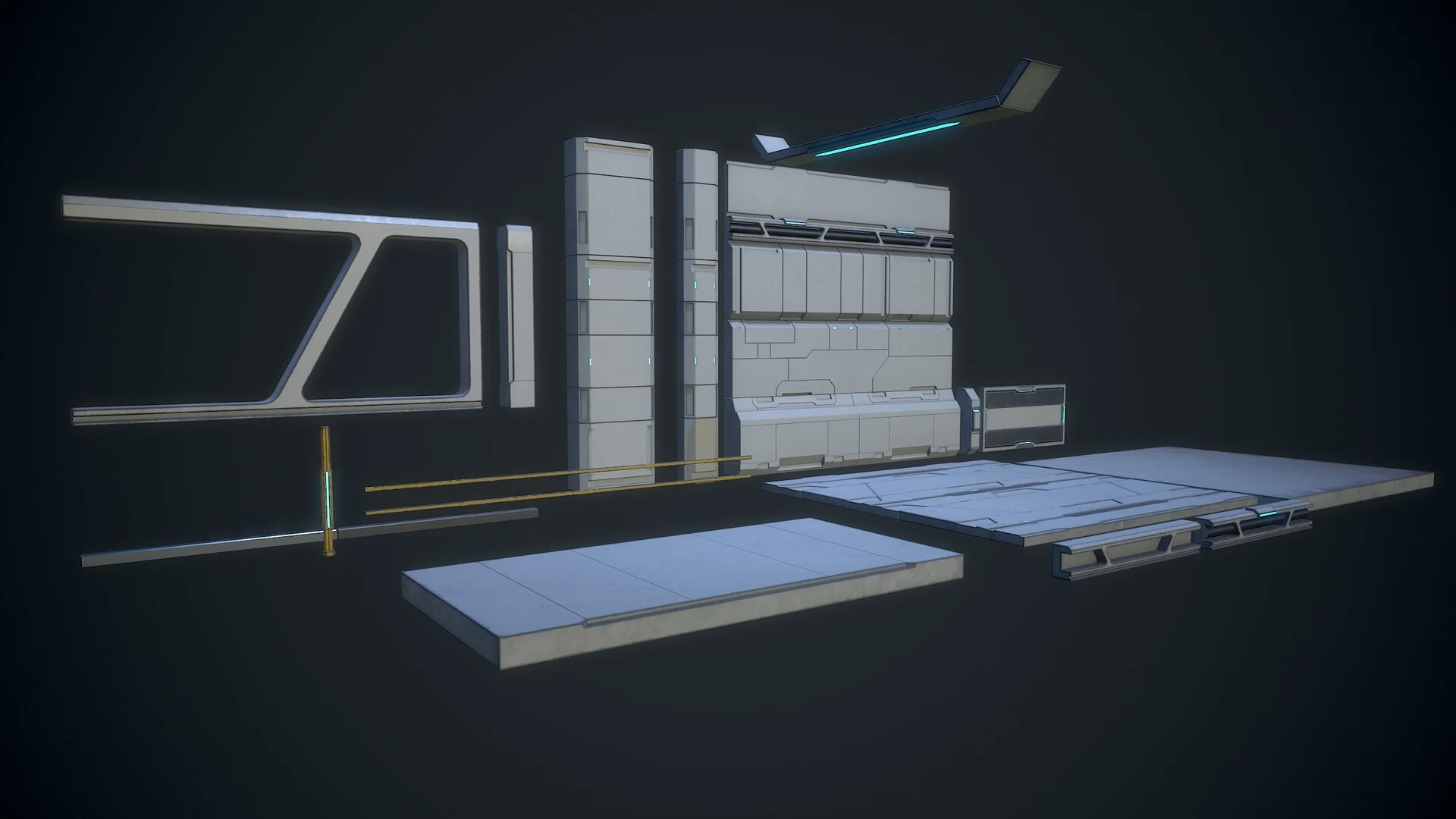
Modular assetsStill · click to load
Never autoloads · initialises on click
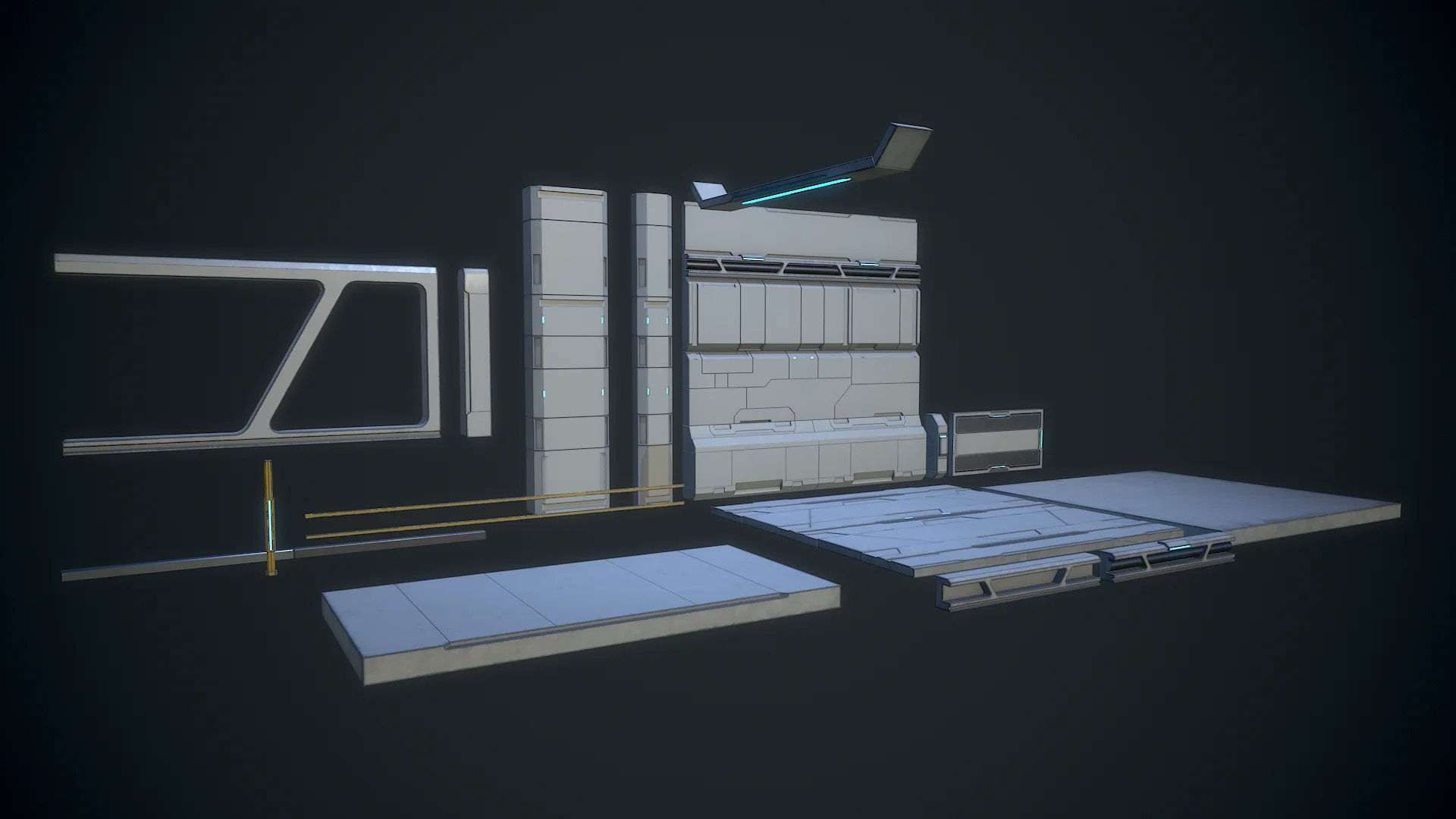
These are the base pieces the whole outpost is built from. Modularity is the point: the same walls, columns and floor tiles get repositioned to produce completely different rooms, so a single kit covers the entire level. Everything was modelled and unwrapped in Maya.
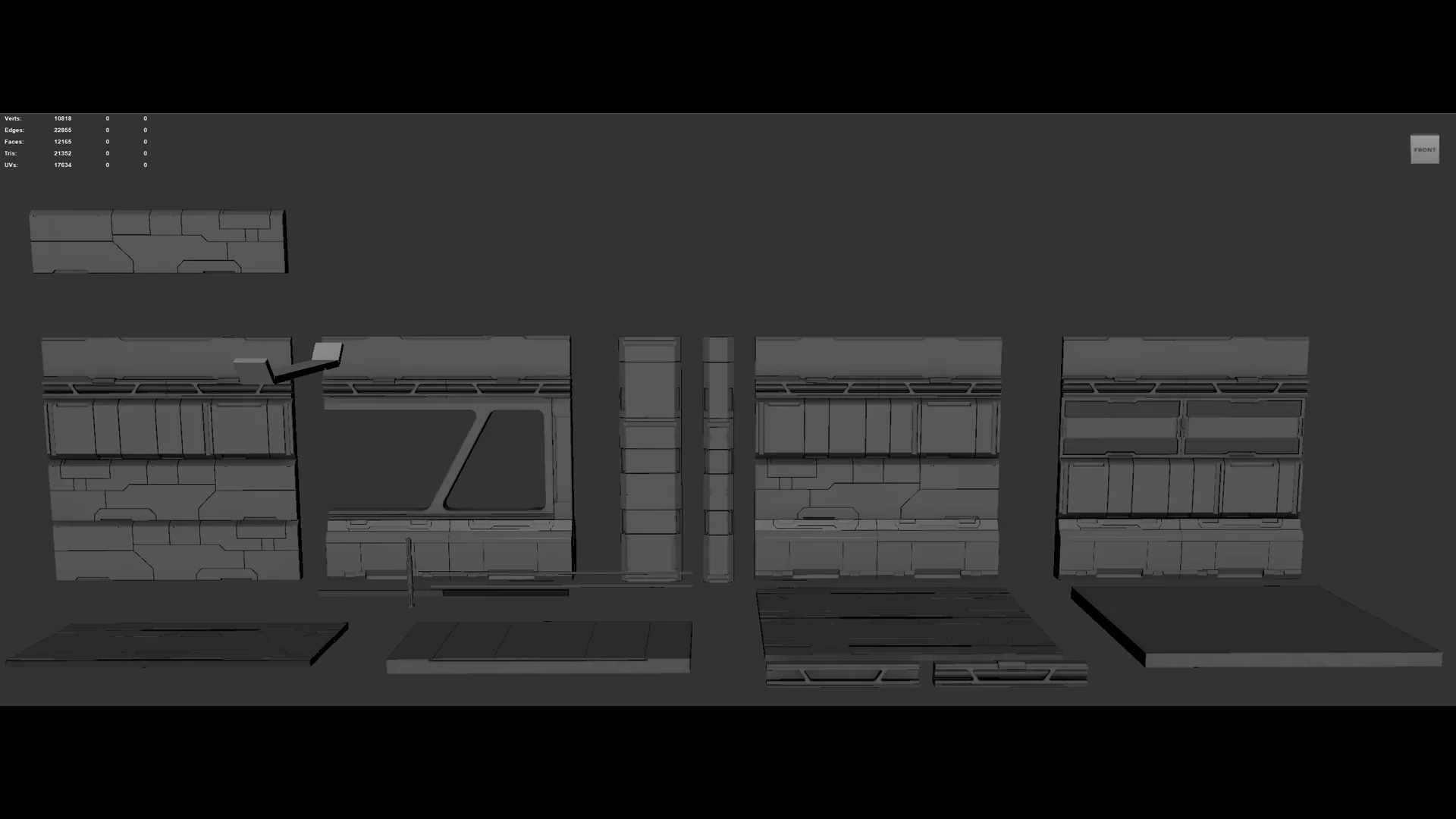
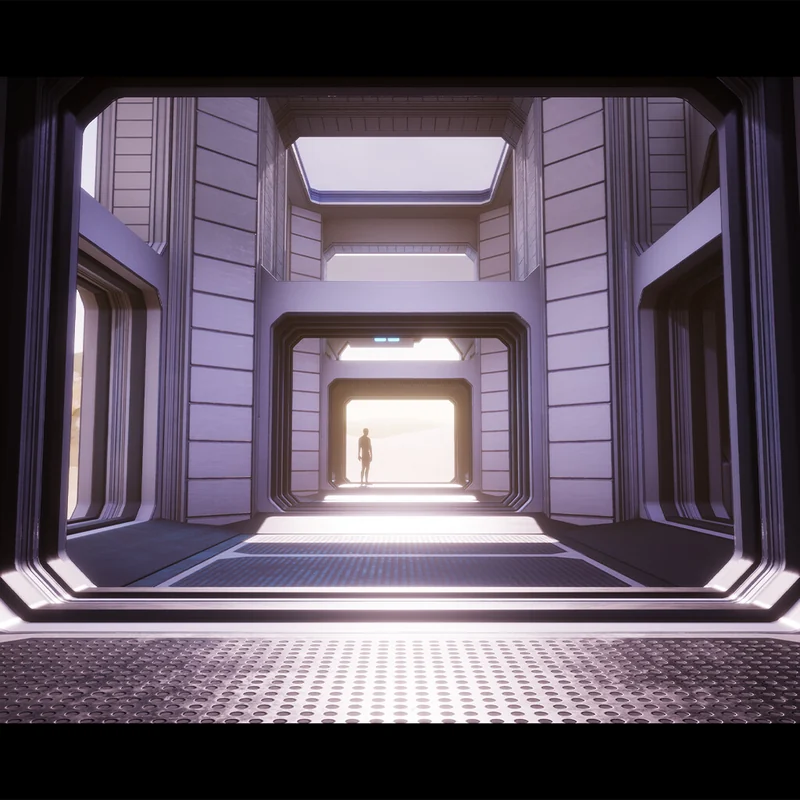
The different wall types, all assembled from that one kit — same pieces, different arrangement. The whole modular set comes to 21,352 triangles across 17,634 UVs, and that number is what keeps a level of this size affordable to run in a headset.
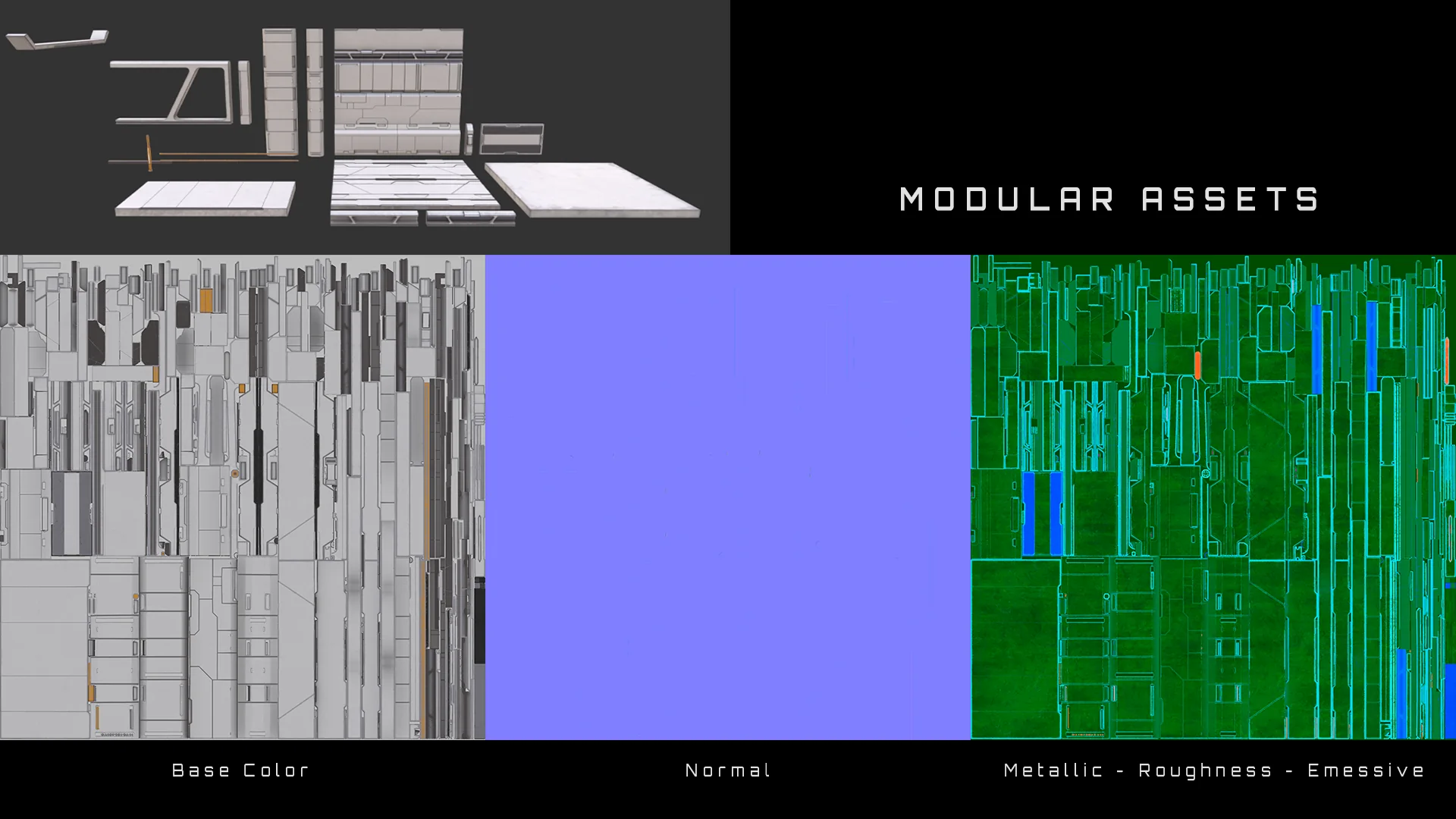
The entire kit shares one 2K texture set built in Substance Painter — base colour, normal, and a single packed map carrying metallic, roughness and emissive. One material for the whole level means the renderer swaps textures far less often, which is where the frame time is actually won.
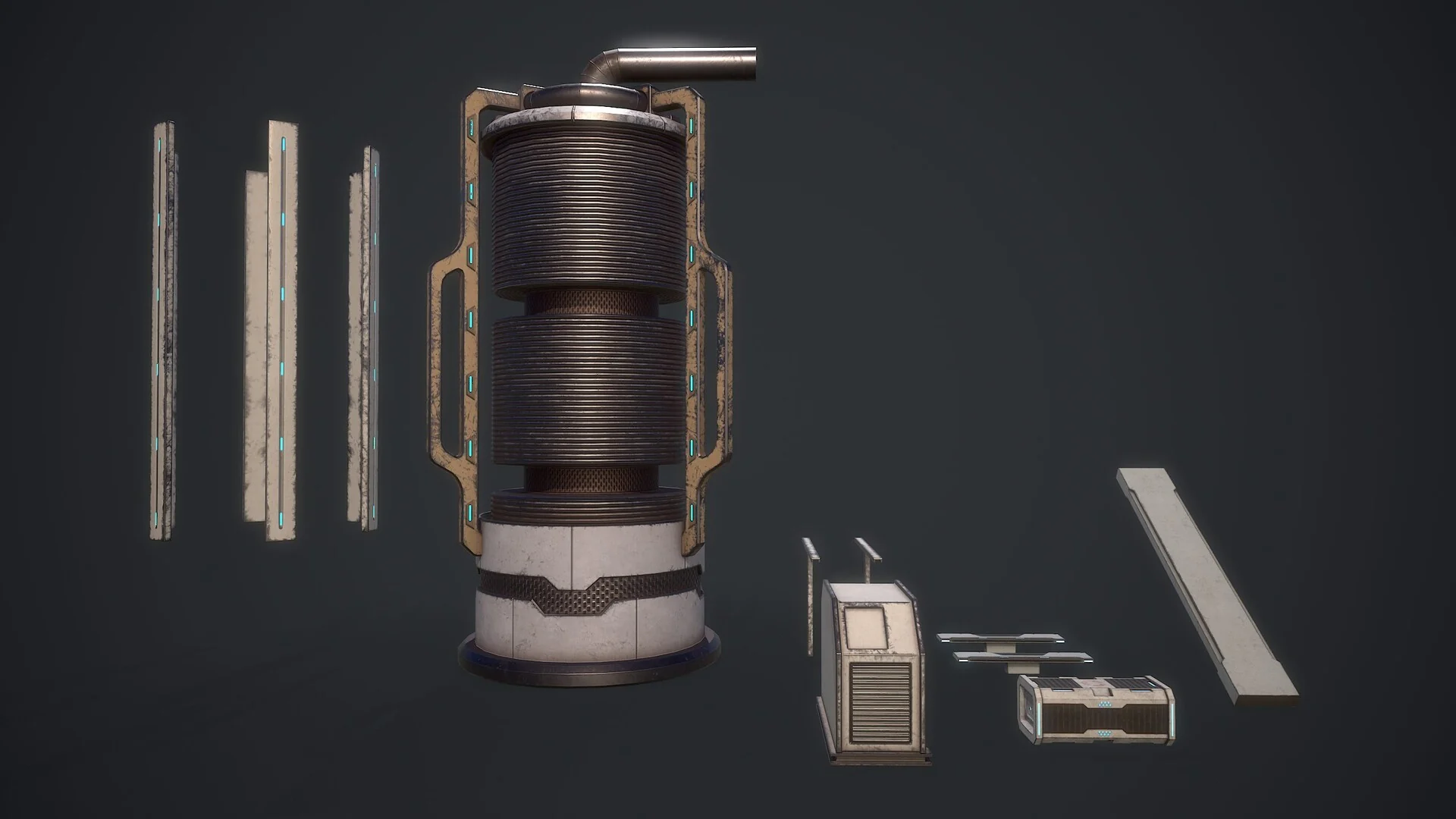
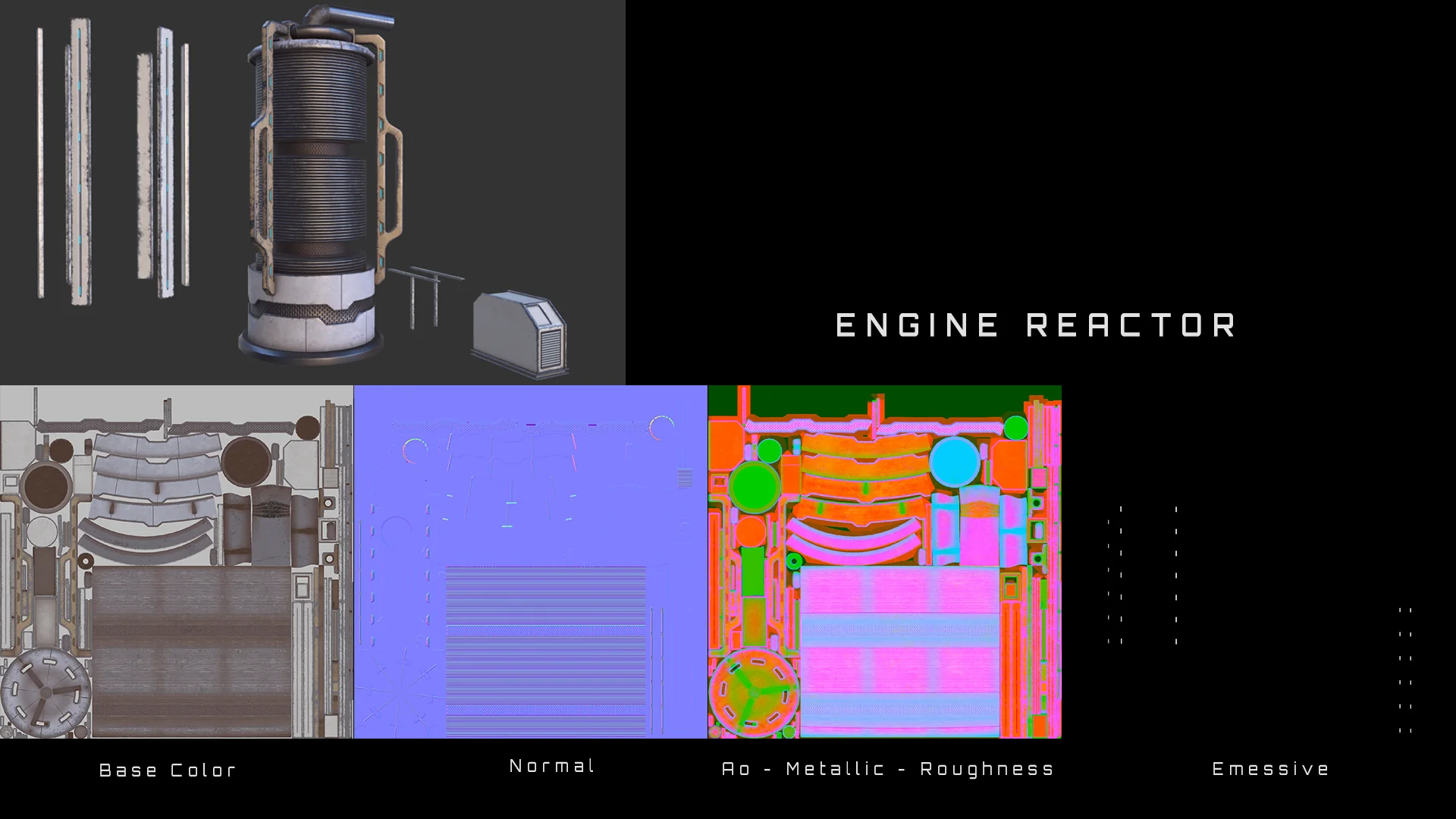
The reactor sits at the centre of the scene and acts as its axis — the power generator for the installation. The vertical shafts were built as separate pieces because they rotate, which also kept occlusion shadows from being baked into them during texturing.
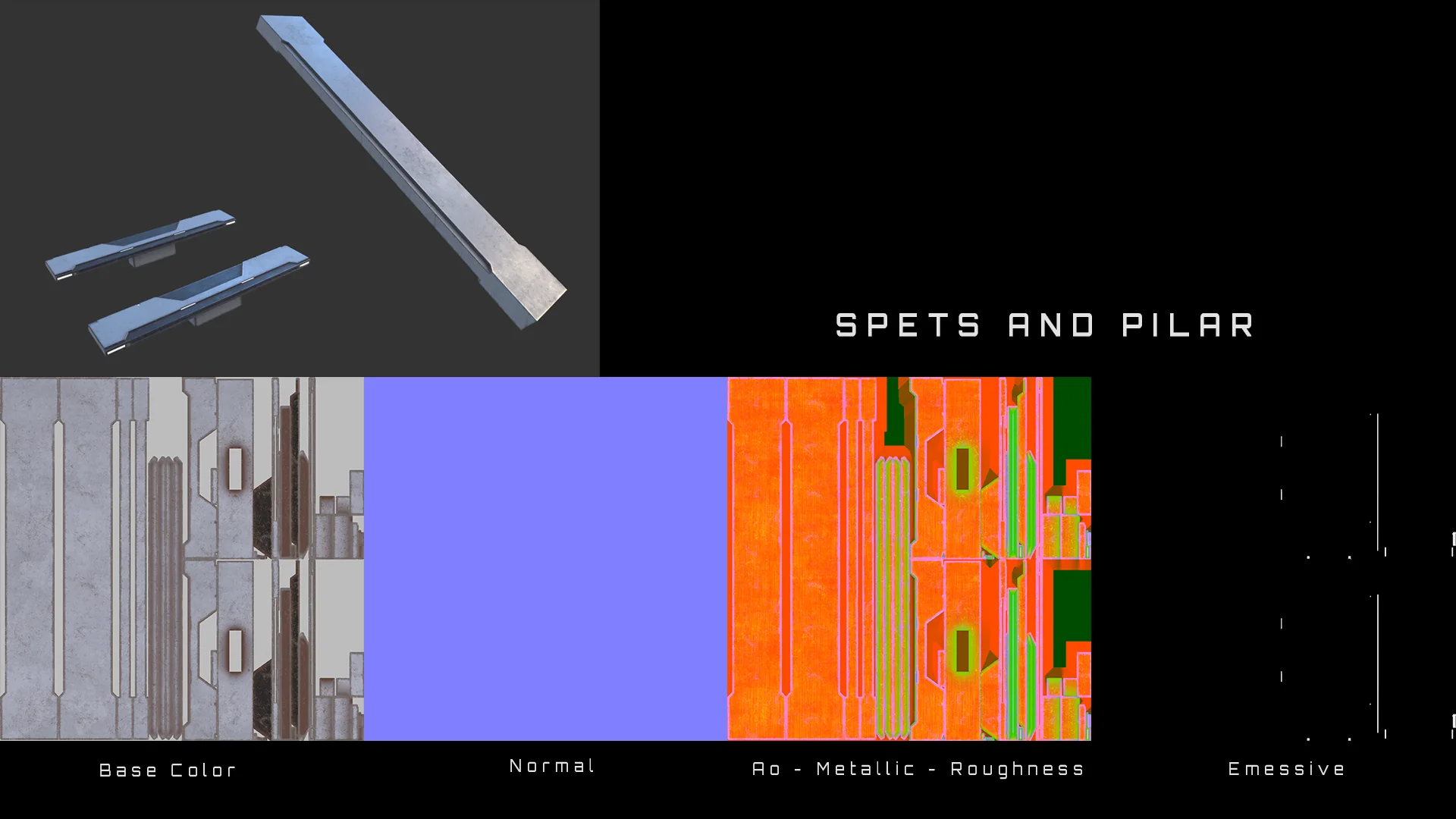
Two steps modelled and then repeated for the whole staircase. Each step takes 512 pixels of the 1K sheet and the rest goes to the supporting structure — repetition is what makes a budget that small stretch across an entire stairwell.
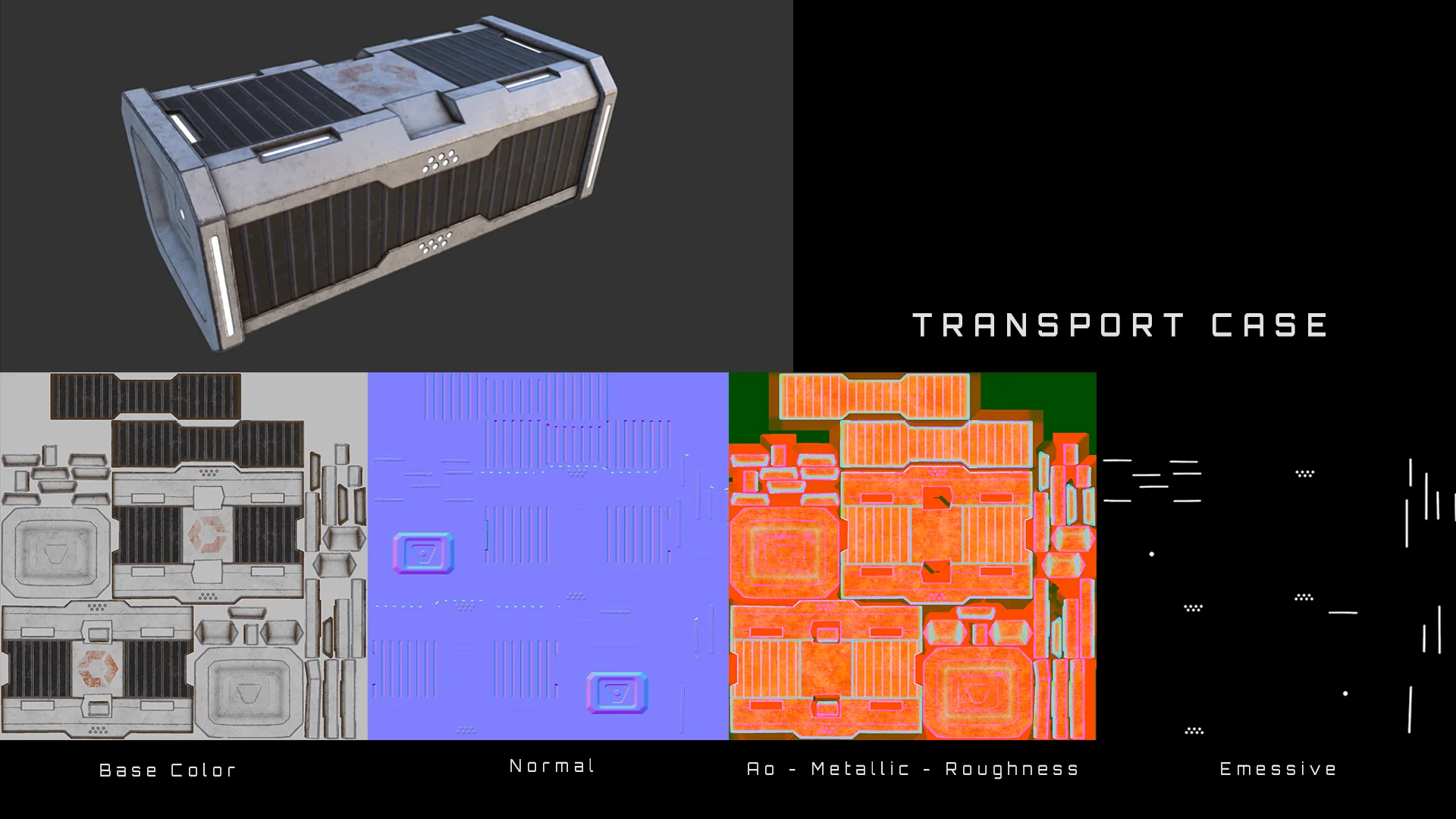
The containers run on their own 1K sheet, separate from the 2K set used for the cylindrical structures and the console. Three texture sets cover the entire environment, each sized to how close the player actually gets to it.